by Hollywood Sports
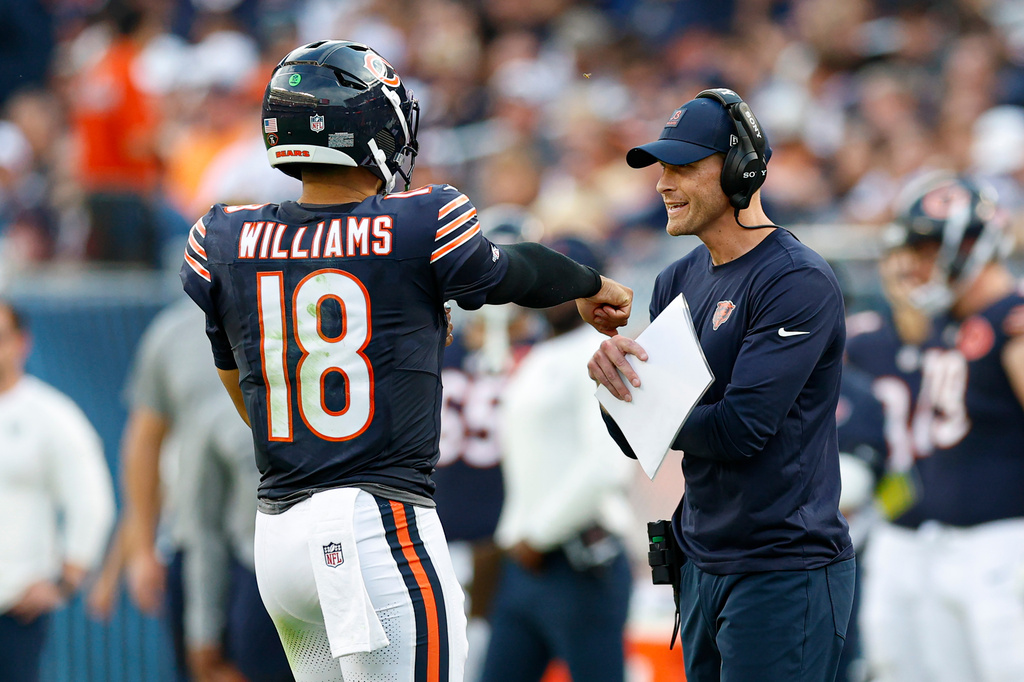
Saturday, Oct 31, 2026It is telling that this current wave of fourth down aggressiveness, apparently coming from the secret Big Book of Analytics that was published around ten years ago, is so trusted explicitly by too many pundits without ever reading or scrutinizing the evidence. We live in interesting times when it comes to when we are comfortable putting faith in authority. Many of these folks thought it prudent to “do their own research” when it comes to attempting to discern the science backing the use of vaccinations for public health. But if Ben Johnson is forgoing gimme field goals for going for it on fourth down, these same guys (yes, mostly guys) too often just shrug and conclude: “that’s what the people who claim to be authorities tell us what the math says!”
I will leave the question unanswered as to why there is a certain type of person who considers “doing my own research” as appropriate in some instances yet blindly trusts the data-driven conclusions of others in other situations. I have plenty of thoughts that transcend the sports arena. However, I have a dream where this current era of football color commentators cosplaying as head coaches who think anyone cares what their random opinion regarding how they would handle a game management situation would be. The audience will no longer be subjected to these “experts” spreading the gossip regarding what they heard someone read when getting hold of one of the rare copies of the Big Book of The Analytics that actually provides the data and methodologies regarding the formulas that result in 50.1% projections being deemed: “The Analytics say GO FOR IT.” Apparently, the Marxist critiques regarding the profit motive in the pharmaceutical industry and vaccines do not extend to dudes trying to sell books (or getting social media likes) about how they would handle the football game management circumstances of the moment if they had control of the console in the Madden game. No, ESPN/Disney and The Athletic are public interest projects, unconcerned with profits. Greed is bad when it is professional golfers doing the LIV Tour, and sports washing is something that, definitely, only countries run by brown people conduct. Whether it’s challenging the assumptions of vaccine research, playing stenographer regarding what the agreed-upon Smart People say about how to manage football games, lecturing millionaire athletes about their professional decisions, or just asking questions about countries other than the United States attempting to monetize sporting events, what is most important is appreciating just how smart the messenger of these “insights” is. Now I’m even doing it. Look what you made me do, Greg Olsen! Did your Bachelor of Arts in Criminology at the University of Miami (FL, not Ohio) include reading some Foucault — or was that stuff cancelled along with a section on Dunning-Kruger?
This is a silly period of time where a field of economically motivated folks pretend they invented the field of statistics and quantitative methodology. Qualitative methodology will make a comeback, although it will be a revolution not led by former professional athletes, even the ones who got through three years of majoring in American Studies at schools with great science departments across the quad, like at California-Berkeley. Rant over (I do have a word count threshold to meet …).
This current wave of The Analytics will improve drastically when someone finally begins to borrow the logic of the “analytics” in another activity that involves a mix of mathematical principles and human emotion: poker. Doyle Brunson’s Super/System book, first published in 1978, details the advantage poker players seize from taking advantage of leverage by making big bets that force opponents to make difficult decisions (especially when all the opponent’s chips are at stake).
This idea of leverage applies to football when teams have the opportunity to increase their lead by another scoring possession. My argument is that football coaches should settle for field goals more often rather than going for it on fourth down when the additional three points change the scoring possession lead/deficit. For example, taking a 10-point lead with a chip-shot field goal is probably a better choice than risking a fourth down to keep a potential scoring touchdown opportunity alive — and if you don’t believe me, then watch one game where a Kirk Ferentz-coached Iowa takes on the role of the underdog and what happens when they are down only one scoring possession versus being down multiple scoring possessions. Or ask Michigan.
A scoreboard lead by more than one possession instills additional pressure on the opponent — and that may trigger more mistakes by them. And, by the way, the head coach may think their fourth down probability is roughly a 50% probability assessment — but that does not mean every play call design inherently enjoys that 50% risk. When fourth-and-one at the opponent’s goal line with a 38-year-old immobile quarterback, a play design using shotgun with four wide receivers with a few fade routes and inside slants in a crowded end zone is probably far away from a 50% proposition. Ordering an extra-large Diet Coke does not amplify the “dietness” of the soda.
And, by the way to this by the way, more consideration should be given to the momentum swing gifted to the team that successfully stops this fourth down attempt. The pure analytics folks do not believe in momentum because they understand that every statistical moment roughly being the same being essential for the sample size of their data being valid for the question they are asking. Most of the pundits on TV invoking the Big Book of Analytics do not know this. Probably most of these “experts” believe in momentum. Poker players certainly believe in momentum. The description of a poker player going on “tilt” is simply suggesting the player is experiencing negative momentum. Golfers have a similar concept when they describe players who have the “yips.” The pure analytics folks don’t believe in momentum, as they argue these concepts of being on tilt or the yips are simply a rationalization to describe ordinary events.
While talk of momentum is certainly overused by sports talking heads, that does not mean the concept does not exist — and recent studies about flow state are providing evidence that when Michael Jordan gets into the zone and cannot miss a basketball shot, it’s not simply redescribing a great basketball player doing great basketball things. If you have ever had the yips or gone on tilt playing poker (or making social media posts) — or maybe even felt something different in your body while nailing six 3-pointers in an intramural game despite being a mediocre basketball player, then you probably have a different conclusion about whether or not momentum is real. The Analytics will be more helpful in making in-game decisions when the formulas that require the rejection of the concept of momentum are finally rejected.
The presumed monolith of “The Analytics” is what I have been critiquing for over a decade. To be clear, I am not critiquing the importance of statistics or quantitative methodology. I use analytics every day when handicapping football, basketball, baseball, hockey, soccer, golf, horse racing, boxing/MMA, and any other sport I have dabbled in. Statistics have existed since mathematics was invented. As always, there are revealing statistics and inconsequential statistics. Calling your search engine “artificial intelligence” does not fiat that the machine is doing its own thinking, independent of its programming code. “The Analytics” was always a branding exercise. What should not have been invented when the old wine came in new bottles was the importance of assessing the statistics as evidence to a conclusion.
My critique of Ben Johnson is not just that he might have the wrong numbers; it is that he seems to fail to realize that the statistics are nuanced rather than obvious answers. Head coaches like John Harbaugh seem to have a better understanding of this, given his comments in the past where he mentions assessing the circumstances of the moment. In academia, that is called qualitative analysis. Most advanced degree programs in these areas require specific classes in both qualitative and quantitative analysis to better understand how these modes of reasoning interrelate.
Of course, I am not suggesting that color commentators get an actual Master’s degree before opining on a particular subject that moves outside the Xs and Os of their sport of “expertise.” But imagine the idyllic moment of silence that would produce for the rest of us! There are plenty of very good poker players who have a sophisticated view regarding what statistics are and are not saying without getting the diploma. Doyle Brunson never studied Game Theory. I suspect he would have been a very good teacher on the subject.
Leverage changes the urgency of the statistical moment — and that changes the relevance of much of the sample size data used to justify a particular decision. Poker players understand this. Too many football color commentators are incurious, at best, or simply bandwagoning the latest fad that is considered smart, at worst. We will live in a better world when The Big Book of Analytics is not treated as the capital-T Truth but rather as a component in how to deploy the strategic advantage of Game Theory in sporting events, like Football.
Best of luck - Frank.
